Are we really expected to be the same person in our late 30s, 40s or 50s that we were in our 20s?
Of course not.
We grow.
We change.
We become more aware of who we are, what we need, what we value, and what we’re no longer willing to tolerate.
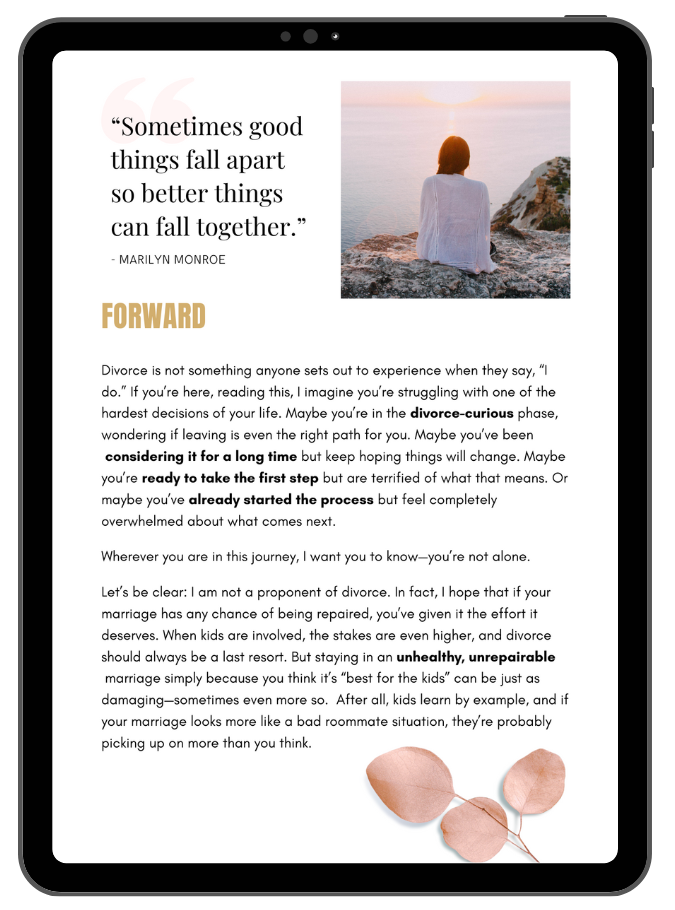
So if people grow—and if growth is natural and expected—then it stands to reason that sometimes two people grow in different directions. This is often the quiet beginning of growing apart in marriage.
What Worked Then May Not Work Now
Maybe you and your partner were soulmates in your twenties, and even early 30s.
You laughed easily, had shared dreams, grew a family together.
But now, years or decades later, things feel… off.
You try to reconnect.
You shrink yourself to avoid fights.
You tell yourself you should be happy.
But deep down, it’s like trying to shove a square peg into a round hole.
And the harder you push, the more it hurts.
It Doesn’t Mean the Marriage was a Failure
It may have been the most important chapter of your life.
One where love was real, children were born, and lessons were learned.
But just because it was right once doesn’t mean it still is. This is the difficult reality many face when marriage no longer works.
We accept this logic in almost every other area of life.
Books. Movies. Careers. Friendships. We expect growth. We expect change.
But in marriage? We expect permanence—even if it means betraying ourselves in the process.
6 Subtle Signs You May Be Growing Apart in Marriage
If you’ve been feeling a quiet disconnection, here are six emotional signs that you may be evolving in a different direction than your partner:
- You feel lonelier with them than without them.
Emotional disconnection often feels more painful when you’re sitting next to someone who feels miles away. - You’re constantly filtering yourself.
You walk on eggshells, avoid topics, or shrink your truth just to keep the peace. - What you value has fundamentally shifted.
Maybe you crave depth, purpose, or adventure—and they just want things to stay the same. - You fantasize about freedom more than intimacy.
Daydreaming about solo travel or a peaceful home alone isn’t just escapism—it may be clarity. - You feel more like roommates than partners.
You manage the household, the calendar, the logistics—but the emotional and physical intimacy is gone. - You question whether your children are witnessing a healthy relationship.
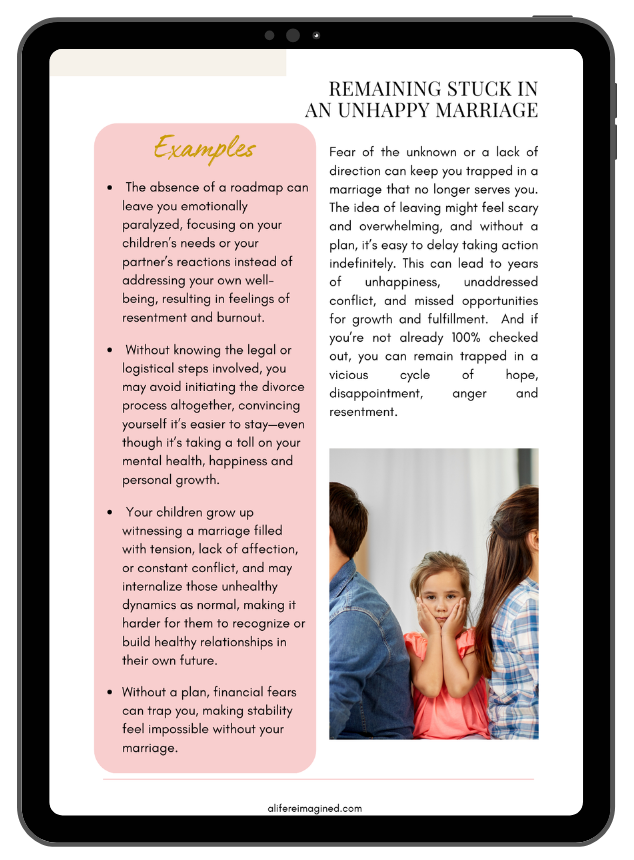
You wonder if staying together is truly teaching them about love—or about settling.
Staying the Same to Keep Others Comfortable
Many moms stay in marriages not because they’re thriving—but because they believe it’s better for:
Their kids
Their parents
Their friend group
Their financial security
Their image
Their comfort
But denying your growth to keep other people comfortable is a quiet betrayal of self.
And when you deny your evolution, it doesn’t disappear. It turns inward—into resentment, anxiety, or depression.
So Ask Yourself:
Are your children truly better off seeing you live a life that feels small or disconnected?
Can you show up fully for others if you’re not showing up fully for yourself?
Is the person you’re presenting to the world… the same one you are inside?
When the Known Becomes a Prison
I sometimes think of it like this:
There are inmates who spend so long in prison that when they’re released, they panic.
The world outside feels unfamiliar and unsafe. So they return to the only thing they know—even if it hurts.
The same can be true in unhappy marriages.
You convince yourself it’s fine—because it’s predictable. It’s familiar.
You choose the pain you know over the freedom you don’t.
And then, if you do get out, the urge to run straight into another relationship is strong.
You crave stability. You miss companionship. And unknowingly, you choose someone eerily similar to the person you just left.
That’s why second and third marriages have even higher divorce rates.
Unless… You Do the Inner Work
If you want a different future, you have to understand your past.
You have to look at:
– Why you were attracted to the person you married
– What parts of you were abandoned or ignored to keep the relationship going
– What red flags you missed—or excused—early on
– What you need to feel whole now
Maybe in your younger days, the “bad boy” felt exciting.
But now? With children and real responsibilities? He feels exhausting.
And yet… he still feels familiar. That’s the part to get curious about.
And when you do start getting curious—when you really do the work to understand those old patterns—you begin to make new choices.
A True Story
A friend of mine found herself at this exact crossroads.
After divorcing her emotionally unavailable husband, she started dating again—and ended up with a genuinely kind, stable guy. The kind of man who showed up consistently, didn’t play games, and treated her like a queen.
But after a few months, she admitted she was… kinda bored.
Not because anything was wrong, but because her nervous system wasn’t used to peace. She had associated emotional unpredictability with passion for so long, anything healthy felt flat.
And here’s the brilliant part—she didn’t give up.
Instead, she acted on the advice of her therapist and started to bring adventure into the relationship. They booked trips, tried salsa dancing, explored random towns on weekends. She created the spark she wanted without needing chaos. And he was 100% game.
Now? She’s in a satisfying, drama-free relationship with someone who takes care of her in ways her ex never could—and she’s still getting her “excitement fix.”
The difference is, she’s not getting it from dysfunction. She’s creating it intentionally.
And that’s what doing the inner work can unlock.
What If You’re Not Ready to Let Go?
If something inside you still wants to try—listen to that.
Sometimes, people do grow apart… but sometimes, they grow differently and need help finding each other again.
You can ask:
Have we both changed, or have we just stopped being curious about each other?
Do we still share core values—even if our personalities or lifestyles have shifted?
Are we both willing to put in the work—not just to fix what’s broken, but to build something new?
And most importantly:
Can we talk openly about what we want now—not what we wanted twenty years ago?
If the answer is yes, that’s where deeper conversations, couples therapy, or intentional reconnection can begin.
But both people have to want it. Both people have to be willing to show up differently.
Staying can be a brave choice, too—if you’re staying for the right reasons, not just the familiar ones.
Final Word
Growth is not a betrayal. It’s a birth.
And honoring who you’re becoming doesn’t always mean walking away—it might mean showing up differently, asking harder questions, and seeing if your relationship can evolve with you.
Whether you choose to stay and rebuild something new, or lovingly close the chapter and start again—you deserve to live a life that feels aligned, whole, and true.
Because the most powerful love story of your life… might just be the one you write with yourself.
If you’re on this journey, know that personal growth after divorce is not only possible—it’s powerful. And if you need help along the way, I’m here to support you. Find out how we can work together here.